Skip to Content
The content on this page has been translated automatically.  Go to the original page.
Energieopslagsysteem LR Shutterstock 2280668065

The energy transition creates new opportunities and new risks. With the use of Energie Opslag Systemen (EOS) we can store energy and use it later. EOS is a beautiful, sustainable development, but also raises new and especially different (fire) safety issues.

Three main reasons to install an EOS

  1. Using self-generated energy at a different time
    Energy from solar power installations, wind turbines or other generators can be stored and later used within the company. This increases the degree of self-sufficiency.
  2. Financial benefit
    Because of the possibility of storage, you can buy energy when it is cheap and sell it more expensive at a later time. In addition, by installing an EOS, a smaller grid connection can suffice, because the energy is supplied by the EOS at peak times.
  3. Durability and grid stability
    Due to the increase in solar and wind energy, energy generation is very variable. The buffer and absorption capacity of an EOS allows the electricity grid to be balanced.

Insurance solutions

Insurers are in favour of making society more sustainable and contribute to this by offering insurance solutions. After all, it is important for the insurance industry and all other relevant parties to gain insight into the developments, the most important safety risks and the technical aspects at an early stage, of course insofar as they are currently known.

For and by insurers

This brochure is written for and by (policymakers, risk experts, underwriters and loss adjusters working for) insurers. The aim is to provide knowledge and insight into Energy Storage Systems and the developments. Insurers can use this knowledge in-house in their (acceptance) policy and promote the insurability of these systems. Of course, other parties are also free to use the information. The content is derived from various sources and is based on current knowledge and practical experiences of insurers. The purpose of this brochure is to provide knowledge and insight about EOS.

Dynamic brochure

The brochure is informative, but not exhaustive and does not replace applicable standards and laws and regulations. It is a dynamic document that is constantly evaluated and adapted to the (technical) developments and the laws and regulations in force at the time.

Technology of Energy Storage Systems

In general, each EOS consists of several battery racks, which in themselves consist of several battery modules. A module is a composition of several battery cells. An example  of the structure of a typical EOS is shown in Figure 1. It contains a composition of battery cells, modules, and racks.
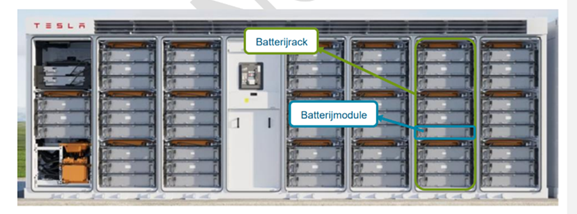
Figure 1: Royal Haskoning DHV report "Energy storage systems - Guide for insurers" 2024

A typical EOS installation consists of one or more EOSs in combination with other installations with the function of supporting the energy storage and charging process, such as inverters, transformers, control and control equipment (Figure 1-2). In some cases, some of these installations are also located in the EOS

Cell

The basis in which electrical energy is stored is a lithium-ion cell. The cell consists of a negative and positive pole with the electrolyte in between. Electrolyte is a material that conducts ions well. A membrane, the 'separator' , prevents the positive and negative poles from touching each other, which would cause a (short) circuit, resulting in a thermal runaway. The lithium-ion moves within the cell between the poles and produces a chemical energy. Electrons move outside the battery and provide electrical energy.

When charging the cell, the process is reversed. 
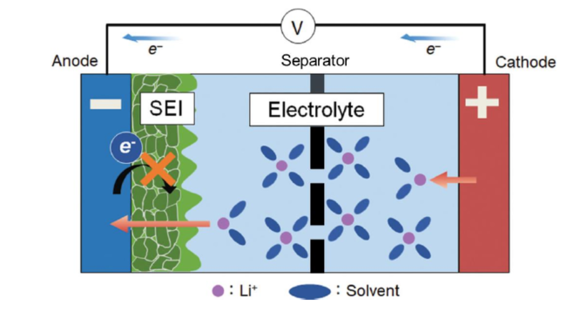
 

Figure 2 Image of Mirjam van Helvoirt (Achmea)

Module

In a module, several cells are merged. The module is in a unit and can usually be removed in its entirety. By merging the cells, the voltage increases and more currents flow. A module often has monitoring of voltage, current and temperature.

Unit / Rack

There are several modules in the unit. The unit, also known as a battery rack, is controlled by a battery controller that regulates charging and discharging.

Installation

The entire installation includes several units including a battery management system and possibly climate control and power electronics.

Battery management system (BMS)

The battery management regulates charging and discharging within the EOS. In addition, this includes safety features and control of the system." In addition, the aim is to optimise the lifespan.

Balancing cells

The BMS can also balance individual cells. This equalises differences in charge levels. This prevents "cell drift" so that certain cells are not constantly over-discharged or overcharged. With passive balancing, the excess energy is converted into heat via a resistor. This until all cells have the same voltage. In active balancing, the voltage is transferred from the cell that is too high to the cell with a lower voltage. This prevents the energy from being lost.
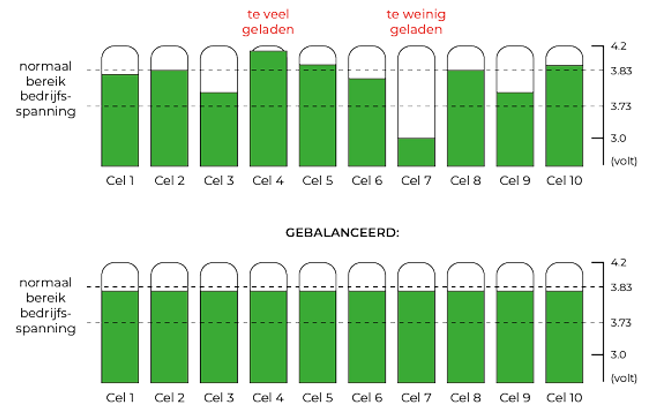
Figure 3 https://nipv.nl/wp-content/uploads/2025/04/20250424-NIPV-Batterijmanagementsysteem-en-thermal-runaway.pdf

Energy management system (EMS)

The energy management of the location is controlled with the Energy Management System. This determines whether energy is imported or exported. This is often linked to control boxes that extract information from the energy markets.  

Inverters

The energy carriers are supplied with direct current. To convert the alternating voltage from the grid, inverters are needed from alternating to direct current. In solar power installations, which also produce direct current, inverters can be combined in which the direct current from the solar panels is converted to alternating current and also the direct current to the energy storage. 

Climate control

Energy storage is temperature sensitive. There are energy losses that cause heat and if the environment is too cold, the storage capacity decreases. For these reasons, climate control is often used. 
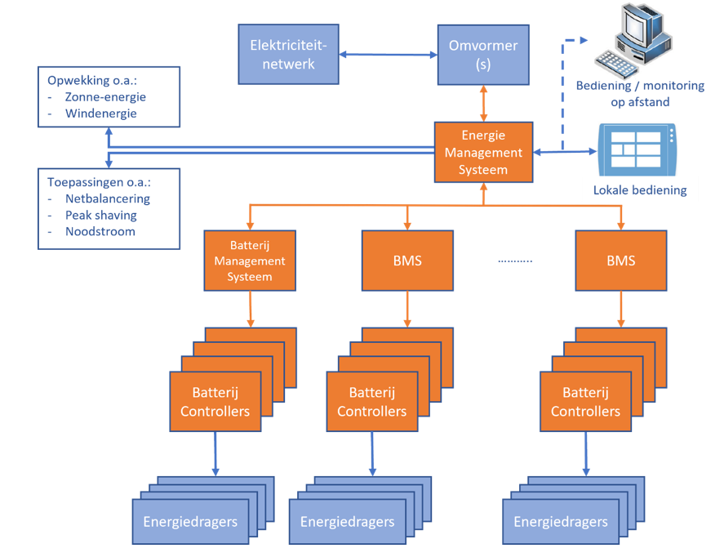
Figuur 4 PGS 37

Overview of the risks of the Energy Storage System (EOS)

Energy Storage Systems (EOS) are crucial for a stable and sustainable energy grid. They make it possible to store energy efficiently and use it at the right time. At the same time, these systems entail various risks, such as fire hazards, technical failures and environmental effects. Below is an overview of the most important risks and points of attention when using EOS, risks that also apply to home batteries and storage locations of individual batteries.

Fire and explosion risks

  • Thermal runaway due to internal cell defects or overheating
    When one or more battery cells heat up uncontrollably, creating a self-reinforcing process.
  • Excessively high charge/discharge currents in the event of a defective BMS
    Too high a voltage damages cell chemistry.
  • Poor ventilation
    - Too high or too low temperature
    - Failure of the cooling system
  • Installation in combustible environment
    - Origin of fire due to flammable items in the immediate vicinity
    - Fire spread from or to the immediate vicinity
  • Mechanical damage
    By falling or bumping.
    Falling trees or other adjacent things. Damage caused by storms, for example.
    Collision can lead to mechanical damage to the installation and cells.
  • Accumulation of gases
    In enclosed spaces without ventilation.
    Accumulation of flammable and toxic/corrosive gases causes an extremely high risk of explosion
  • Storage of (flammable) materials near an EOS
    Can lead to fire or arson and nesting pests.
  • Possible consequential damage in the event of a fire
    - Smoke damage
    - Water damage when extinguishing
    - Environmental damage during extinguishing
    - Distribution/transfer to adjacent spaces/adjoining areas
    - Risks for emergency services
    - Choice of a burn-down scenario if risks for emergency services become too great
    - Fire spread by means of above-ground cables or cable penetrations

Environmental and health risks

  • Smoke development
    Release of (toxic) smoke
  • Toxic fumes
    Decomposition of electrolyte produces harmful substances, smoke from fire.
  • Electrocution
    - High DC voltage in the event of an unsafe installation or defective shielding.
  • Environmental risk
    - Improper drainage or leakage in the event of damage can release heavy metals or electrolytes.

Technical risks

  • Systemic risks
    - Faulty software or management/monitoring systems can lead to improper charging or discharging procedures, which can cause fire or outages.
    - Grid congestion and grid failures can lead to system overload.
  • Loss of capacity
    - Faster than expected degradation due to heat or misuse.
  • Short circuit in battery, inverter or cabling.
    - Due to poor cabling or moisture.
  • Production errors
    - Manufacturing defect in the cell structure or insulation.

Operational risks

  • Cybersecurity
    - Systems can be susceptible to remote access or tampering.
  • Poor accessibility
    - Insufficient or unreachable for emergency services in the event of an emergency.
  • Extinguishing water
    - Access to insufficient extinguishing water
  • Vandalism, burglary and theft
    - Damage by unauthorised persons
  • Contractual obligations
    - Failure to meet contractual obligations due to failure after damage.

Economic and regulatory risks

  • High investment costs
    Uncertainty about the payback period
  • Changing regulations
    New requirements may require adjustments
  • Insurance problems
    Difficulties in insuring the risks

Other risks

  • Unstable ground
    - With dangers of subsidence, moisture and water inflowing
  • Nearby (water) pipes
    - Sudden leaks that can lead to damage.
  • Pests
    - Gnawing, digging and eating damage.
  • Sun and weather influences

Prevention

Depending on the typical (indoor EOS, mobile EOS, energy storage park, independent EOS in container) and the energy content (kWh), the following may or may not (partially) apply.

Laws and regulations

  • Always check with your insurer and competent authority about the conditions set for the installation of energy storage systems.
  • The Living Environment Buildings Decree (Bbl) and the Environment and Planning Act prescribe:
    - Safe installation: The battery must not pose an unacceptable fire hazard to the surrounding area.
    - Escape routes: The installation must not block escape routes or cause smoke to spread.
    - Fire compartmentalisation: Batteries can be housed in a separate fire compartment, often with 60- or 90-minute fire-resistant separations/WBDBO (Resistance to Fire Door and Fire Flashover).
    - Installation requirements: Connection must comply with NEN 1010 (electrical installations). 
  • The minimum safety is achieved by setting up and implementing in accordance with PGS 37-1 (the PGS applies from 20 kWh).
  • Advice: always place an EOS outside, preferably keep at least 10 meters between EOS and objects/buildings. In agriculture and horticulture, this is partly due to aggressive fumes around, for example, stables, fertilisers and manure storage and feed silages.
  • PGS 37-1 is not a law but can be declared applicable by the competent authority or insurer.
  • Some important safety measures from the PGS 37-1 are, for example: 
    - An EOS must be set up on a stable surface and external influences, such as rising damp, inflowing water, etc., must be taken into account.
    - The EOS must also be protected by means of a fence, for example, against external impact, access by unauthorised persons, damage, etc.
    - An EOS must have a fire resistance of at least 60 minutes to the property boundary, to another building (not being an EOS) or to other flammable objects. A distance of 10 m instead of 60 min is also sufficient. Or at a distance of between 5 and 10 metres, a fire resistance of 30 minutes is sufficient. PLEASE NOTE: many insurers impose stricter conditions on the installation of an (indoor) EOS.
    - A fire management system for an indoor EOS  of > 100 kWh.
    - A roof above the EOS must be 3 meters higher than the top of the EOS to allow cooling or extinguishing.
    - (Water) pipes in an EOS room are not allowed.
    - In an EOS room, a pressure relief must be present
    - An EOS must be sufficiently ventilated to prevent an explosive mixture. In case of emergency, ventilation should be maximum. An indoor EOS may not be ventilated in other rooms or other ventilation systems. 
    - The ventilation system must be checked or maintained in accordance with the manufacturer's instructions. A log of this must be kept.
    - Collision protection by means of, for example, crash barrier construction.
    - An EOS within the risk contour of a wind turbine must be resistant to icefall and ice deposits.
    - Preventive shutdown in the event of an alarm.
    - Emergency stop device.
    - An EOS must be checked and maintained at least annually.
    - A logbook  must be kept of each EOS.
    - An EOS must always be easily accessible for emergency services. Advice: place an emergency number of the supplier on the outside of the EOS, which is preferably also available during the weekend.
    - Of course, it is important that all preventive measures are coordinated.

Location and architectural requirements

  • In the event of a fire in an EOS, a 'thermal runaway' can occur; This is a chain reaction. This produces toxic, flammable and explosive gases; Therefore, always make sure you have a well-ventilated setup. (When placing in a closed space/container, also consider, for example, ATEX, sufficient ventilation and connection of the fan to an end group). This chain reaction keeps the fire itself alive and can usually no longer be extinguished. There are still few effective extinguishing agents/systems for this. Such a fire can usually be poorly cooled to inhibit the chain reaction. The extinguishing water can also be toxic and corrosive.
  • Depending on the energy content of the battery, a fire can last for a very long time. When set up in a building, a fire resistance of, for example, 60 to 240 minutes of WBDBO is therefore usually not sufficient. An indoor setup is therefore never preferred. 
  • The risk of fire spreading is preferably limited by distance (of 10 m or more), and possibly in combination with concrete silo walls or a wall of concrete stackable blocks, popularly known as concrete Lego blocks.
  • Always place the EOS above ground level and in accordance with the supplier's specifications to prevent water intrusion.
  • When installing multiple EOSs, take into account sufficient distance between them to limit fire spread. Or build a separation/barrier wall with sufficient protruding surface between the EOSs to shield them from each other.
  • Work cables underground to prevent fire spread via cables and façade penetrations.
  • Is the system equipped with the correct storz coupling? Storz is intended as a last line of defence. Then make sure that it is easily accessible at all times, in the right location and that the system conversion can demonstrably handle the hydrostatic pressure.
  • An outdoor installation should be protected from the sun and weather if necessary. However, do not cover the EOS so that cooling and/or repression becomes impossible.

Fire safety measures

  • An EOS system should (preferably) be equipped with:
    - A battery management system (BMS);
    - A temperature detector at cell, rack and cabinet level;
    - A smoke detector;
    - (CO and H2) gas detection;
    - Monitoring;
    - In the event of an alarm, notification via 2 different providers;
    - Fire management system (aerosol or foam extinguishing system (from FiFi4marine, for example));
    - (Storz) connection for extinguishing water. (Note: not all parties are convinced of the effect of this provision).

Electrical safety

  • Have the EOS installed and connected by a skilled installer;
  • Have the distributors to which the EOS is connected inspected by a SCIOS approved inspection company, after all, the energy flows are going to change;
  • An EOS must be protected against lightning, induction and overvoltage.
  • Have an EOS checked, monitored and maintained in accordance with the manufacturer's specifications.

Calamity

-    Draw up instructions on how to act and who should be alerted in the event of an emergency (see Appendix A for an example emergency plan).
-    Inform family members, staff and possibly emergency response officers about this.

Cyber

An energy storage system (EOS) is much more than a battery and an inverter, it is not a passive system but an active system that charges and discharges through various systems/software. Typically, organisations such as suppliers, grid operators, energy suppliers can monitor the system remotely. So it's important to realise that you're connected to many third-party systems. Below is an example:

System Connected to the Internet Protocol/Interface Function
BMS, Battery Management System No (local) CAN/RS485 Battery protection
EMS, Energy Management System Yes TCP/IP, MQTT, REST API Market communication, charging schedules
SCADA, Accessibility from supplier Yes Modbus TCP, OCP UA Monitoring and control
Fire detection control panel Yes/No BACnet, API Alarms
IT management platform Yes HTTPS/VPN Firmware updates, logging


Cybersecurity

There are risks associated with a networked system. As can be seen in the overview above, an EOS has many systems that are connected to the internet. This is for communication with the energy market, for monitoring from, for example, the supplier(s), or to update the software but also the fire alarm system. All in all, these connections pose risks to access the EOS. In addition, an EOS can also be connected to building management systems, solar power installations, charging stations, etc. So many more systems may be accessible to unauthorised persons via the EOS.
It is therefore important that you delve into how the data flows run within the organisation in order to find out vulnerabilities in Information Technology (IT) or Operational Technology (OT). After all, you don't want a hacker to manage your system or end up on your company's server via your EOS. 

Recommended technical and organisational measures

Cybersecurity

  • Multi-factor authentication and access control by role
  • Encrypted communication (TLS 1.3)
  • Regular pen testing and updates
  • Air-gap between BMS and the internet
  • Continuous monitoring (SIEM, IDS)

Organisation

  • Training staff in emergency procedures
  • Periodic testing of security systems
  • Emergency procedure + communication plan
  • Backup and recovery procedures (data and control)

Residual risks

External hack despite firewalls cannot be completely ruled out. However, the risk can be greatly reduced by:

  • Layered security (firewalls, IDS, network segmentation, zero-trust)
  • Endpoint protection and software patch management
  • Secure remote access (VPN, MFA, IP whitelisting)
  • Monitoring and logging (SIEM, log analysis)
  • Fallback capabilities (autonomous local control, emergency braking)
  • Regular testing (pen tests, cyber exercises)
  • Cyber insurance to cover residual risks

Future developments Cyber

The topic of Cybersecurity is becoming increasingly important for EOS. Recently, the EU Cybersecurity Directive (CRA) was adopted, which will also be implemented in the Netherlands. This is the Cyber Resilience Act and this directive is in line with the NIS2. Having a PEN test carried out and ensuring that your system at least complies with the European CRA directive during its lifespan can be wise.

Fire propagation

Fire propagation in an EOS is the spreading of a fire in the system. As discussed earlier, there are energy carriers present, namely the battery cells. There are several cells in a battery module, several modules in a rack and several racks in the system. One of the risks is that a battery becomes unstable, resulting in a thermal runaway. This means that the cell temperatures can rise above 550 degrees Celsius. When the temperatures rise, various flammable gases escape from the cell, including the explosive hydrogen gas (H2). 

Preventing fire spread

You want to prevent a domino effect from occurring within the module, i.e. that one cell heats up the other cell and that it also becomes unstable. So you want to limit propagation/fire expansion to the cell or at least keep it within the module. To provide insight into this risk, there are fire propagation tests.

Four main groups

Systems that do not pass such a fire propagation test therefore have the risk of rapid internal fire spread, i.e. the cells all ignite each other.

There are currently four main groups in the market:

  • Energy storage systems that do not meet a fire propagation test;
  • Energy storage systems that pass the fire propagation test according to IEC 62933-5-2, with a focus on system safety;
  • Energy storage systems that obtain a partial certificate in accordance with the UL 9540A test (cell, module, rack level);
  • Energy storage systems that are fully certified at a UL 9540A system level. 

UL9540A and IEC 62933-5-2

The IEC method is an international safety standard. The UL method is a defined test method, the entire system can then be tested in a UL laboratory. The UL tests on four levels (cell, module, unit and installation level). It may be that an installation only reaches the cell or module level, then the system test  is unfeasible or not tested. Always ask for the result of the test to assess its value. Fail is also a result. Part certificates have little value and are therefore not an installation level test. 
In the PGS 37-1, value is assigned to the IEC and UL methods. For example, systems may be placed closer together, the water connection for the fire brigade is no longer mandatory and there are still a number of measures that can be omitted.     

Differences between UL and IEC

The UL method and the IEC standard therefore certainly have added value in terms of (fire) safety. However, you cannot compare them with each other. Of course, you can design a system in accordance with IEC 62933-5-2 and then have the system tested in accordance with the UL9540A. The system that carries both labels has increased safety compared to the four main groups mentioned above.  

Degassing of cells

There are also pitfalls with the UL method that you can deal with, for example, no ignition source is kept at the outgoing harmful and flammable gases, while in reality there may be. The escaping combustible gases have quickly reached the lower volume percentage to form an explosive mixture in atmospheric conditions (LEL/LFL ca 5 - 6%). There are plenty of ignition sources within the EOS with minimal ignition energy. One of the exiting combustible gases is hydrogen gas (gas group IIC) with an ignition temperature of 560 degrees Celsius. Tests from battery suppliers show cell temperatures of 552 degrees Celsius, so there is no wide margin of safety. The equipment inside the enclosure does not comply with a particular appliance category for gas group IIC.

Ignition sources

So the ignition of flammable venting gases is underexposed in the test/standard. A highly ventilated arrangement of the system is therefore by far preferable. This is also the focus of attention in the UL 9540A update of 2025. In this UL test, the flammable escaping gas is collected in a sphere and then exploded to determine the Pmax value. A Pmax of 9.98 Bar is not exceptional, this pressure wave can lead to major damage to the casing of the gas being the housing or otherwise the building in the event of an indoor installation. 
Familiarize yourself with the test and/or standard before you want to weaken prevention measures, is the advice. 

Appendix: Emergency plan

See also (in Dutch) PGS 37-1:2023 version 1.0 (DECEMBER 2023) (publicatiereeksgevaarlijkestoffen.nl)

An up-to-date emergency plan (see Appendix E in the PGS 37.1 for an example) on how to act in the event of incidents has been drawn up. The installation manager is responsible for keeping the emergency plan up to date and distributing it.
The emergency plan is aimed at limiting and controlling calamities, accidents and protecting employees and the living environment. This emergency plan must be available to the party responsible for installation and manager of the EOS and the emergency services.

This contingency plan shall contain at least:

  • Contact information of parties involved; installation manager EOS / network operator, manufacturer EOS, maintenance company, owner.
  • A description of the monitoring; Which parameters are measured and what is intervened on.
  • How the alarm is arranged (24/7);  Which person receives which alarm and how is this technically realised how to respond to the alarm; In addition to how an alarm is handled, there is also clarity about the procedure for an unusual incident. What actions are taken after an unusual occurrence.  By whom and with what urgency. How is safety guaranteed?
  • Scenario descriptions in case of fire alarm;  
    - Fire in EOS: in the event of a fire alarm, divided into urgent, less urgent and vigilance. How is who alerted and what actions must be taken? In addition to personal safety, it also describes how to prevent the extension of the calamity. - Fire at the EOS: what actions are taken to prevent a calamity in the event of a fire in the vicinity of the EOS .
    - Malfunctions: Alarms and actions in the event of malfunctions in the EOS system divided into urgent, less urgent and vigilance.
    - burglary: Alarms and actions after burglary so that safe access can be obtained to the EOS
  • A map showing fire-fighting water facilities: In addition, waterways, hazardous substances, gas tap and electrical main components are drawn
  • Information on access to the EOS site; What driving routes are there, and how can you access the EOS
  • Drawings and coding of the EOS;
  • Technical information of the EOS (power, capacity, etc.);
  • What to do after an incident (clean up any electrolyte leaks, clean up extinguishing water, etc.) What possibilities are there for the creation of (environmentally) hazardous substances? What actions are being taken to mitigate this? By whom and with what urgency. Think, for example, of contaminated extinguishing water, released electrolyte, refrigerant, etc.

Explanation: In the case of manned locations, align the emergency plan with the internal emergency plan (emergency response, evacuation, employee training, etc.) and review the emergency plan at least every three years and update it if necessary.